ByJohn A
What Is Proof of Work vs Proof of Stake?
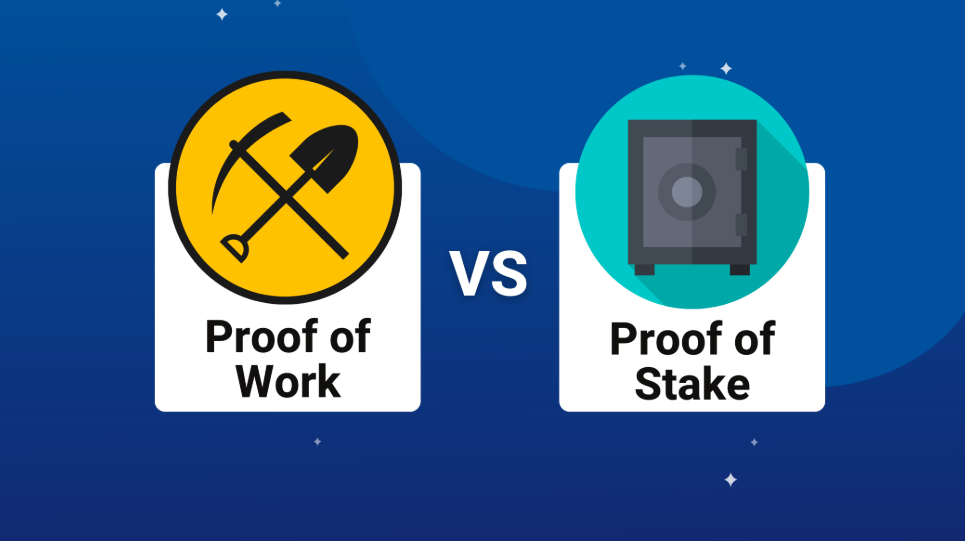
Proof of Work and Proof of Stake are two core consensus models for securing blockchains, each with distinct incentives, failure modes, and performance implications. PoW relies on energy expenditure and computational difficulty to deter attacks, while PoS uses stake and randomness to finalize blocks with different security guarantees and efficiency profiles. The choice shapes security, throughput, and sustainability, yet the practical tradeoffs depend on governance, economics, and use case. The comparison raises essential questions about resilience, incentives, and long-term viability.
The PoW vs PoS Decision Framework
The framework clarifies security incentives by aligning participant participation with measurable risk reduction, while acknowledging energy costs as a material factor.
It fosters disciplined comparison, emphasizing principled tradeoffs and freedom through transparent, objective criteria.
How Proof of Work Works: Mechanisms, Guarantees, and Tradeoffs
Proof of Work operates by requiring participants to perform resource-intensive computations to validate and add new blocks to a blockchain, with success contingent on solving a cryptographic puzzle whose difficulty adjusts to maintain a steady block cadence.
Mechanisms incentivize honest participation, but scalability tradeoffs and energy consumption constrain throughput and sustainability, shaping guarantees about security, finality, and resistance to censorship.
How Proof of Stake Works: Mechanisms, Guarantees, and Tradeoffs
How does Proof of Stake achieve consensus without intentionally expending energy on cryptographic puzzles, yet still ensures security and liveness? In PoS, validators stake, attest, and finalize through data-dependent randomness, reducing energy while preserving fault tolerance. Governance incentives align participants with protocol health, while network scalability improves through sharding and compact proofs. Tradeoffs include centralization risk and finality delays, balanced by formal guarantees and incentives.
Side-by-Side Conclusions: Which Model Fits Your Blockchain Use Case
A concise comparison clarifies how PoW and PoS align with distinct blockchain goals, technical constraints, and risk tolerances.
Side-by-side conclusions reveal that PoW emphasizes robust security through resource-based entrenchment, while PoS privileges energy efficiency and rapid governance cycles.
Novel consensus emerges under evolving governance dynamics, demanding clear incentives, transparent rules, and adaptable risk controls across varied use cases.
Conclusion
In the end, PoW and PoS stand as two suns casting different light on a single horizon. PoW burns energy like a tireless forge, sharpening security through effort and time, but weathering volatility and ecological scrutiny. PoS rises as a quiet, efficient loom, threading finality with stake and randomness, trading some open-notary resilience for scalability and governance ease. The choice is a map, not a single beacon: weigh energy, security, finality, and governance to chart the path.